
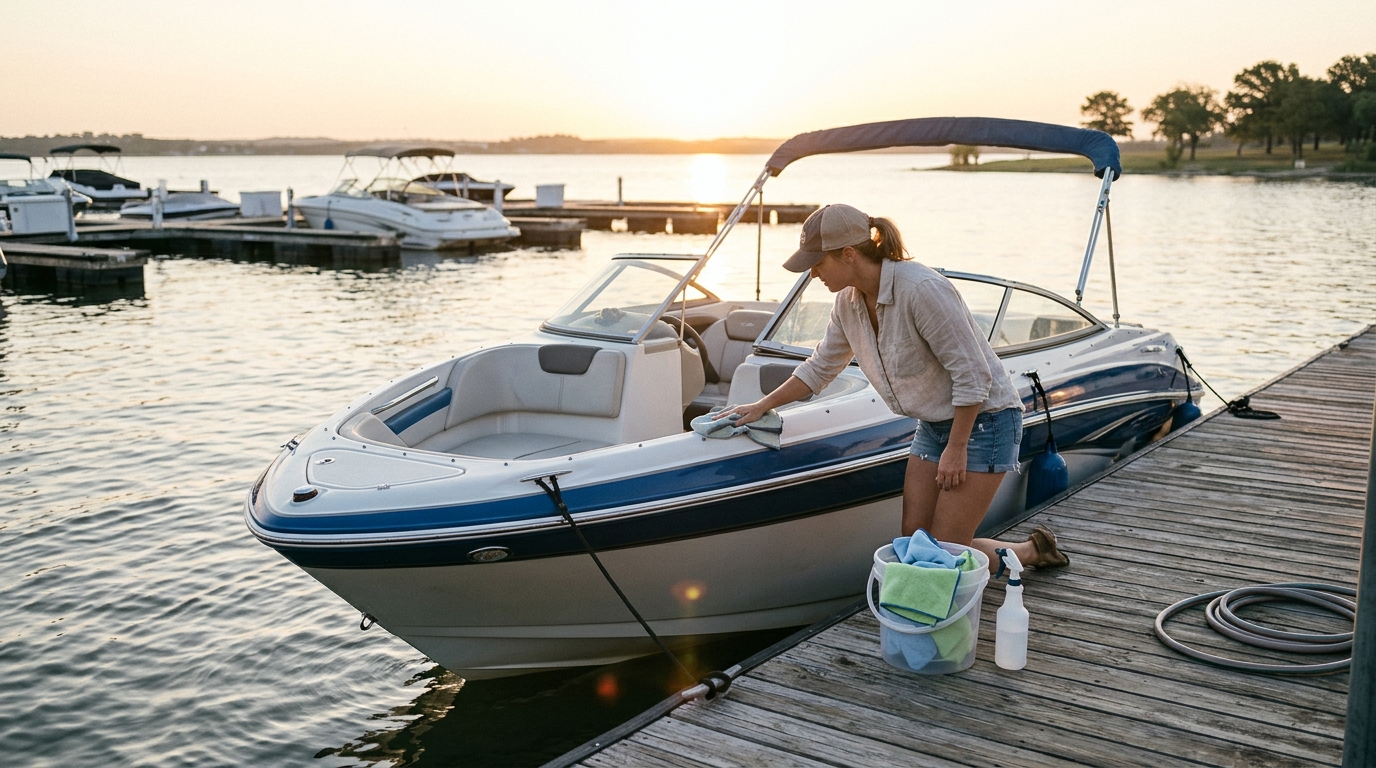
Preparing your boat for professional detailing in the Dallas-Fort Worth area ensures a smoother process and better results. By handling basic cleanup and organization before the detailer arrives, you help them focus on deep cleaning and protection. This guide outlines the critical steps to get your vessel ready for a premium mobile detailing service.
1. Remove Loose Debris and Personal Items
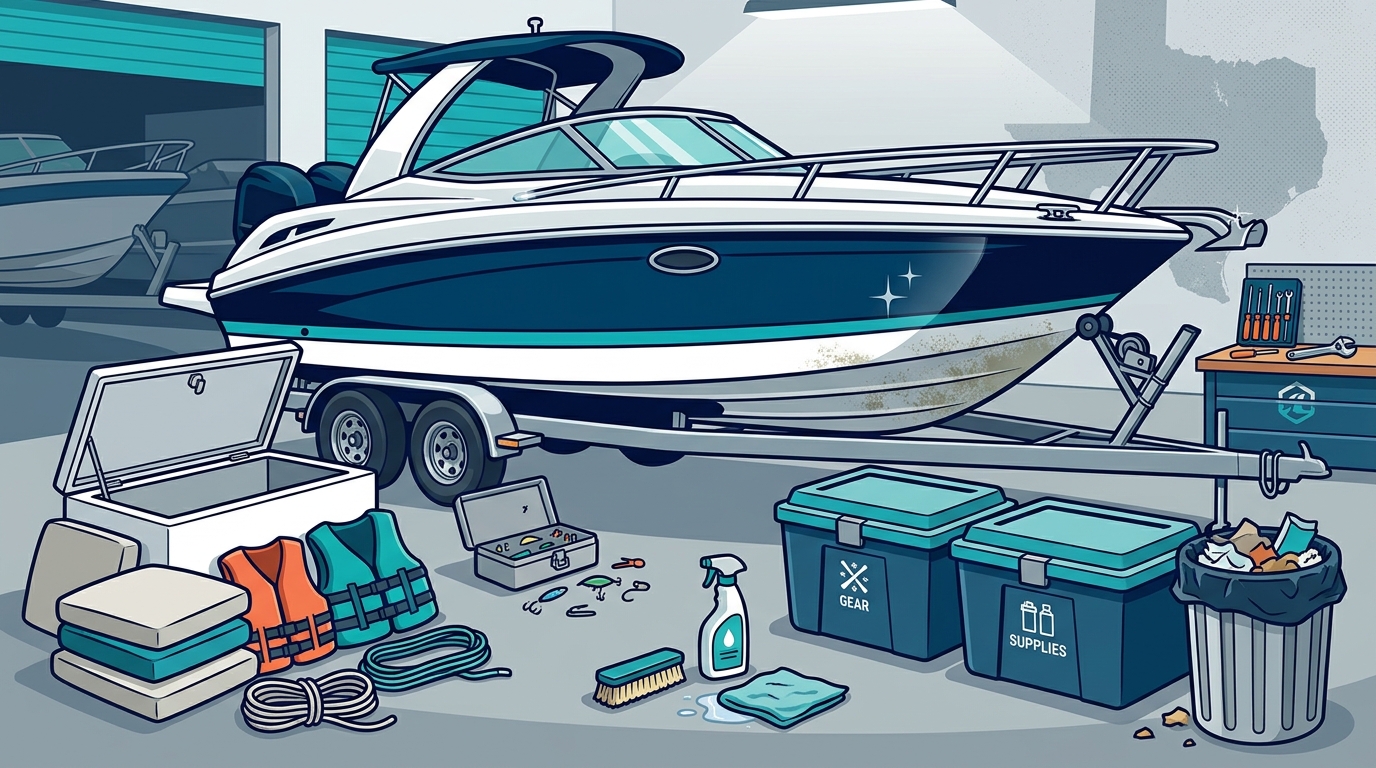
Clear the deck and cabin of all personal belongings and loose trash. Before any professional service begins, you should remove items like coolers, life jackets, and loose cushions. This allows the detailing team to access every surface without obstruction. It also prevents accidental damage to your personal property during the cleaning process.
2. Rinse Off Salt and Road Grime
Perform a basic freshwater rinse to remove surface-level dirt and salt. Dallas weather can be harsh, and boats often accumulate dust, pollen, and road grime from storage or transport. A quick rinse with a garden hose helps remove loose contaminants. This step reduces the workload for the detailer and allows them to focus on deeper cleaning tasks.
3. Document Existing Damage
Take clear photos of any existing scratches, stains, or damage. Before the detailing process starts, document the current condition of your boat. This creates a baseline for comparison after the service is complete. It helps you and the detailer identify which issues were pre-existing and which might be addressed during the session.
4. Ensure Proper Water and Power Access
Provide easy access to a water source and electrical outlet if needed. Mobile detailing units are self-contained, but having a nearby water source can speed up the process. If your boat is stored in a garage or driveway, ensure the area is clear and accessible. This convenience allows the technicians to work efficiently and effectively.
5. Remove Loose Covers and Tarps
Take off any boat covers, seat covers, or window tarps. These items can trap moisture and dirt, leading to mold or mildew growth. Removing them allows the detailer to inspect and clean the surfaces underneath. If the covers themselves need cleaning, you can wash them separately or ask the detailer for guidance.
6. Check for Leaks and Mechanical Issues
Identify any active leaks or mechanical problems before the detail. While detailing is primarily cosmetic, it is important to address any functional issues first. If water is leaking into the cabin or if there are visible mechanical faults, inform the detailer. This ensures that the cleaning process does not exacerbate any existing problems.
7. Communicate Specific Concerns
Share a list of specific areas or issues you want addressed. Every boat is unique, and you may have particular concerns about certain surfaces or stains. Communicating these details in advance helps the detailer tailor their approach. It ensures that your expectations are met and that the final result aligns with your vision.
Choosing the Right Preparation Approach
The best preparation strategy depends on the current condition of your boat and the level of service you require. For a basic refresh, a simple rinse and debris removal may be sufficient. For a deep clean or ceramic coating, more thorough documentation and access preparation are essential. By following these steps, you ensure that your boat is ready for the highest quality care available in the Dallas area.
Frequently Asked Questions
How much should I clean my boat before a professional detail?
You should remove all loose debris, personal items, and covers. A basic rinse to remove surface dust and salt is also recommended. This allows the detailer to focus on deep cleaning and protection rather than basic cleanup.
Do I need to provide water and power for mobile boat detailing?
Mobile detailing units are typically self-contained with their own water and power sources. However, having access to a nearby water source and electrical outlet can make the process faster and more efficient. It is always best to check with your specific detailing provider for their requirements.
Can mobile detailing services handle saltwater damage?
Yes, professional detailing services can address saltwater residue and corrosion. They use specialized products and techniques to remove salt buildup and protect surfaces. This is particularly important for boats that have been used in coastal areas or stored in humid conditions.
How long does boat preparation take?
Basic preparation usually takes 30 to 60 minutes, depending on the size of the boat. This includes removing items, rinsing, and documenting damage. More extensive preparation may be needed if the boat has been stored for a long time or has significant buildup.
What should I do if my boat has mold or mildew?
Inform the detailer about any visible mold or mildew before the service begins. Professional detailers have the tools and products to treat and remove these issues. They can also provide advice on preventing future growth through proper ventilation and maintenance.